Guides
Choosing your wedding date and season
The best wedding date is the one that fits your life, your guest list, and your budget—not just the prettiest season. Start with a few good options, then compare what each date really costs and how easy it will be for the two of you and your guests.
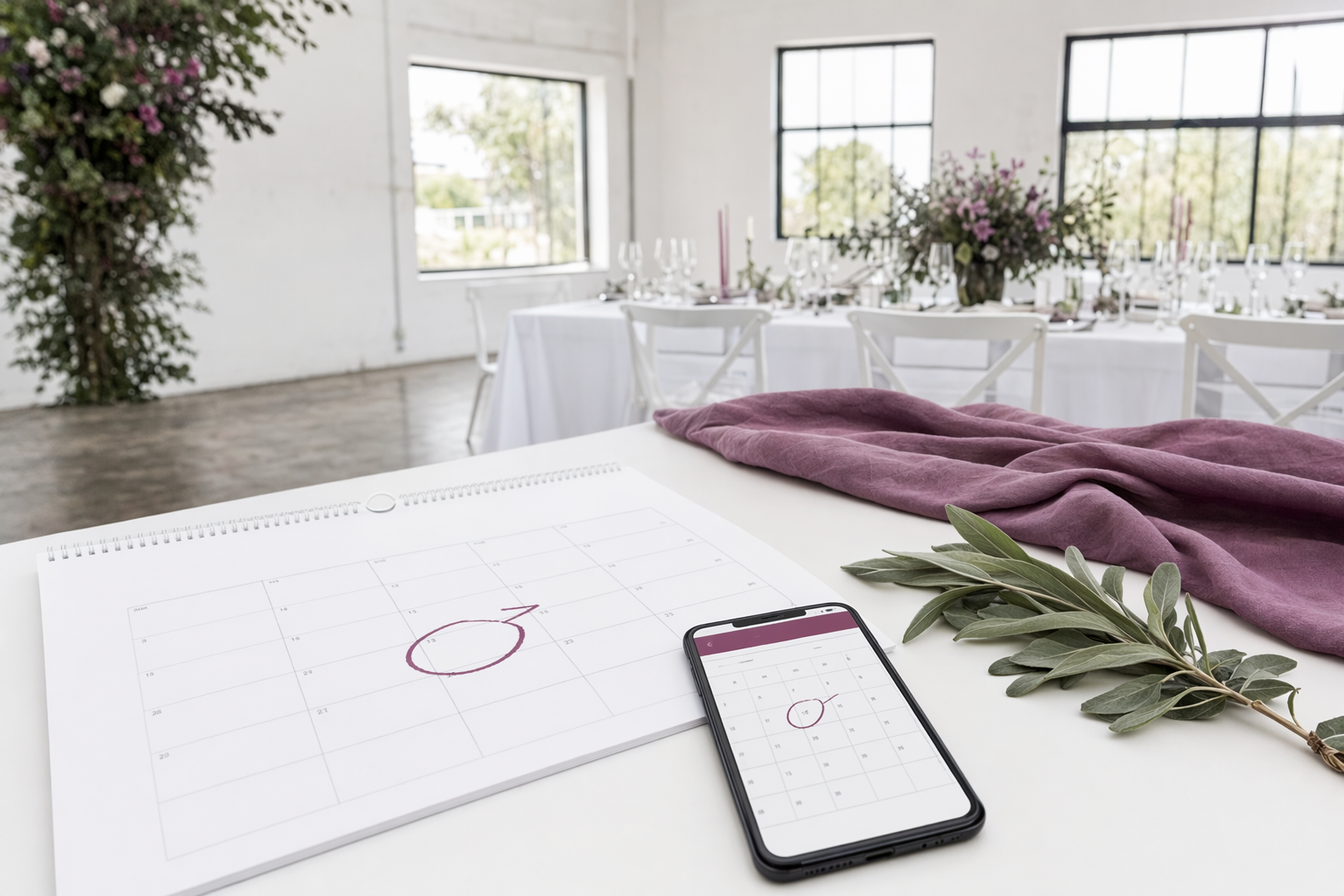
Start with the big picture
If you are trying to choose a wedding date, begin with the things that cannot move easily: work schedules, family travel, school breaks, religious or cultural dates, and any personal meaning you want the day to have.
Then look at your guest list. A Saturday in peak season may be easier for guests to attend, but it is often more expensive. A Friday, Sunday, or weekday can open up more budget room, but it may make travel harder for some people.
If you already know the kind of setting you want—garden, ballroom, vineyard, beach, historic estate, barn—remember that the season changes the feel and the price. A spring garden wedding may be beautiful, but it can also mean higher demand, more competition for venues, and a need for a rain plan.

How season changes cost and comfort
Wedding prices usually go up and down with the time of year, the day of the week, and how popular your city is. In many U.S. areas, prime Saturdays in spring and fall cost more than winter dates, weekday dates, or off-season months. That is not a quote—just a common pattern.
A venue’s all-in price can be shaped by the site fee, food-and-beverage minimum, per-plate pricing, service charge, overtime, and any deposit required to hold the date. In some places, an “affordable” room fee can still become expensive once catering minimums and service charges are added.
As a very rough planning range, couples may see venue-related costs from a few thousand dollars for a simple smaller celebration to well over $20,000 or much more for popular dates, larger guest counts, or full-service spaces. The real number depends on the date, the season, the day of the week, the city, the guest count, and what is included.
A simple way to narrow your date
- Pick 2–4 months that could work for your lives.
- Decide whether you care more about weather, price, or guest convenience.
- Choose one “best” season and one backup season.
- Compare venues for both choices before you fall in love with a date.
- Ask each venue what is included and what costs extra.
If you want help comparing options near you, get matched with wedding venues at no cost. You stay in control: you tour, compare the all-in cost, and choose what feels right.
What to ask venues before you set the date
Before you put down a deposit, ask whether the date is available in writing and what the full pricing looks like for that exact day. Ask about the site fee, food-and-beverage minimum, per-plate pricing, service charge, deposit, overtime, cancellation policy, vendor restrictions, corkage, and any required end time.
Also ask what changes between a peak Saturday and a weekday or off-season date. Sometimes the room looks the same, but the minimum spend, bar package, or included hours are very different.
If you are planning from another city or country, ask how far in advance you need to book, whether tours can happen by video, and how flexible the venue is if your travel dates are limited.
Red flags and fine print to watch
Be careful with any answer that sounds vague: “starting at,” “plus applicable fees,” or “minimums may apply” can hide a lot of the true cost. Ask for the all-in estimate in writing so the two of you can compare places fairly.
Read the full contract before paying any deposit or signing. Make sure the date, hours, guest count assumptions, cancellation terms, payment schedule, and included items are all written down. If something matters to your day—like outside food, cultural menu items, live music, or an extended timeline—check it before you commit.
Vowfield is a free matching service, not a venue or planner. We collect contact and wedding intent only, like your names, phone number, optional email, setting, city or ZIP, rough date, rough guest count, and preferred language. For legal or financial questions, rely on the venue’s contract and licensed professionals.

Pick a date that fits your life first, then compare the real costs and contract details because season, weekday, city, guest count, and inclusions can change the price a lot.
Common questions
What is the cheapest time of year to get married?
Often winter, early spring, or another off-season period, but it depends on your city and venue type. A weekday or Sunday can also cost less than a peak Saturday.
Should we pick the venue first or the date first?
If your date is flexible, it often helps to compare venues and dates together. The “best” date may change once you see the real pricing, availability, and what is included.
How far in advance should we start looking?
Many couples start 12 to 18 months ahead for popular dates, but shorter timelines can work too. The sooner you start, the more choice you usually have.
Can a weekday wedding still feel special?
Absolutely. A smaller weekday wedding can feel very personal and often gives you more room in the budget for food, flowers, music, or photography.