Guides
Wedding venue cost, broken down
Most venue pricing is made up of a site fee, food & beverage minimums, and extra line items (service charge, overtime, and vendor rules). Use this guide to understand what drives the number—before you fall in love and overpay.
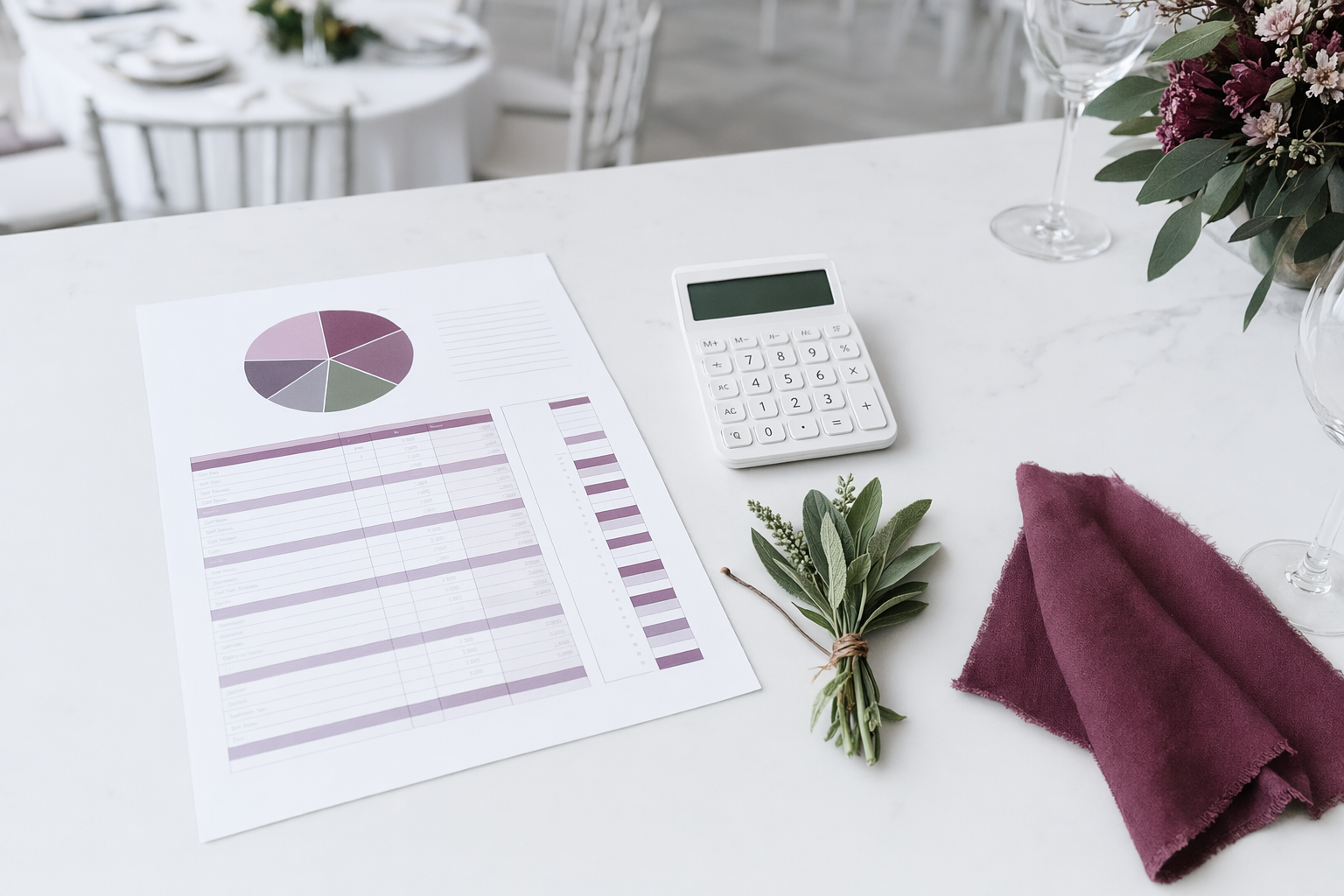
Quick answer: what you’ll usually pay for a wedding venue
In most places in the U.S., “venue cost” isn’t one single number—it’s an all-in bundle of fees.
A typical breakdown looks like this:
- Site fee (paying to use the space)
- Food & beverage minimum (the spend required on meals/drinks)
- Service charge / admin fees (sometimes a % of food & beverage)
- Taxes (often added on top)
Then there are “extras” that can change the total a lot: ceremony-only pricing, staffing, rentals, cake cutting, overtime, and whether your vendors are allowed to bring items or work on-site.
Vowfield is a FREE matching service (we don’t host weddings, set prices, or take commission). We help you get matched with venues near you to tour and compare their real contracts—so you can confirm the full cost in writing.

Real cost ranges (and what makes them higher or lower)
Because every city, season, and guest count is different, these are general ranges—not quotes. Your final all-in price can be higher or lower depending on your exact date and what’s included.
Typical ranges many couples see for an event package (venue + required spend) are often:
- Smaller events (about 20–75 guests): roughly $5,000–$15,000 total
- Mid-size (about 75–150 guests): roughly $15,000–$35,000 total
- Larger weddings (about 150–300+ guests): roughly $35,000–$75,000+ total
These ranges can climb quickly when venues add premium inclusions or when dates are in high demand. A venue that looks “affordable” on paper may become more expensive after service charges, rentals, and overtime.
What drives the cost up or down:
- Season and demand: weekends in peak season usually cost more than off-season weekdays
- Day of week: Friday/Sunday are often cheaper than Saturday
- Guest count: many fees scale per person (and some staffing does too)
- What’s included: tables/chairs, linens, basic staffing, getting-ready rooms, and coordinator support can reduce extra spend
- Bar setup: open bar is usually the biggest variable after food
- Ceremony location: in-house ceremony may be included, or it may be priced separately
- Event length: overtime charges can add up fast if you run late
Always ask for the venue’s “all-in” estimate for your date and guest count and request it in writing. Ranges are helpful for planning, but they’re not a guarantee.
Common line items you should expect (and how to ask about them)
To compare venues fairly, it helps to use the same question list. Ask each venue for the total cost using your rough guest count and the same event time window.
Here are the line items that frequently show up:
- Site fee: the amount to reserve the space
- Food-and-beverage minimum: the required spend on meals, non-alcoholic drinks, and/or alcohol
- Per-plate pricing: what the meal costs per guest
- Service charge / gratuity: sometimes a set fee, sometimes a percentage of food & beverage
- Deposit: what you pay to hold a date or start the process
- Taxes: sometimes included in pricing, often added later
- Overtime: charges if you exceed the agreed end time
- Cancellation / rescheduling terms: how much you can lose if plans change
- Vendor restrictions: preferred vendor lists, required insurance, and limits on outside rentals
- Corkage: sometimes a fee if you bring your own wine or alcohol
What to ask (simple and direct):
1. “What is the total for venue + required food & beverage for 120 guests on our date?”
2. “Is the ceremony included? If not, what’s the ceremony fee?”
3. “Is the service charge included, and how is it calculated?”
4. “What’s included in the package (tables/chairs/linens, staffing, cleanup, basic AV)?”
5. “Do you charge overtime? What counts as overtime and what is the hourly rate?”
6. “Can we use outside vendors for photography, rentals, or music? Any fees or restrictions?”
If anything sounds unclear, ask them to point you to the exact page/section of the contract where it’s written. That’s the fastest way to avoid surprises.
Red flags (what to watch for before you sign a contract)
You deserve clarity—especially if you’re comparing venues from another city or you’re planning in a language that feels less comfortable. If a venue is hard to reach or won’t share details, that’s a sign.
Common red flags:
- “We’ll confirm the exact total later” without a clear estimate based on guest count and date
- Pricing that skips the food-and-beverage minimum, service charge, or taxes
- Overtime terms that are vague (“we may charge overtime”) or rates that are only mentioned late
- Vendor restrictions that limit your budget choices (for example, requiring expensive preferred vendors with no explanation)
- Big gaps between what the sales call says and what the contract says
- Deposit terms that are unusually high or non-refundable without clear conditions
Also watch for “looks-inclusive” offers that hide costs in the fine print. For example, a venue may offer “included linens,” but not include upgraded linens, special event lighting, or the amount of time you need.
Before you pay a deposit:
- Confirm your date and guest count
- Request a written breakdown with the line items above
- Read the full contract (or ask a trusted, licensed professional to review if you can)
This is general guidance, not legal advice—your venue’s contract is the final word on fees and policies.
How Vowfield helps you compare venue costs (for free)
Vowfield makes it easier to find wedding venues near you and compare options without guessing. We’re a free matching service—not a venue, caterer, or planner.
Here’s how it works:
1. Share your basic wedding details (names, phone, optional email, city/ZIP, rough date, rough guest count, and your preferred language).
2. Tell us the setting you’re picturing (garden, ballroom, vineyard, beach, historic estate, barn) and any must-haves.
3. We match you with venues to tour and compare.
During tours, use the same questions across venues so the totals are comparable. And ask for the real numbers for your date—even if the venue also has packages or menu choices.
If you’re new to the area, planning from out of town, or reading in a language other than English, it’s okay to ask venues for written estimates and to slow down. A good venue will be patient and clear.
A practical “cost checklist” for your venue visit
Bring this quick checklist to your tour so you walk away with comparable, written information.
- Venue date and backup date options (if any)
- Event length you’re booking (start and end time)
- Site fee amount (and what it covers)
- Food-and-beverage minimum for your estimated guest count
- Per-plate pricing and what it includes (entrees, sides, dessert)
- Bar package options and whether open bar is included or extra
- Service charge/gratuity and taxes (how they’re calculated)
- Overtime policy: when it starts and the hourly rate
- What’s included: tables/chairs/linens, setup/cleanup, staffing, basic AV
- Ceremony fee (if separate) and where it happens
- Vendor rules: who you must use vs. who you can choose freely
- Corkage policy if you plan to bring alcohol (if allowed)
- Deposit amount and payment schedule
- Cancellation and rescheduling terms
After you tour, compare the all-in totals side by side. If two venues look similar but one includes more (like rentals or staffing), you may actually be getting better value—so don’t compare only the first number you hear.
General info only: always confirm the exact pricing, schedule, and contract terms in writing.

Wedding venue pricing is usually a bundle—site fee plus food-and-drink minimums, service charges, taxes, and possible overtime—so ask each venue for a written all-in breakdown for your date and guest count.
Common questions
Why is the venue cost different from what I hear on the phone?
A quote on the phone often talks about a site fee or an approximate package, while the final total usually depends on your date, guest count, service charge, taxes, and food-and-beverage minimums. Ask for a written breakdown that includes everything so you can compare venues fairly.
Is the food-and-beverage minimum the same as the per-plate cost?
Not always. Per-plate pricing is the cost per guest for meals, while a food-and-beverage minimum is the total spend the venue requires (including drinks, sometimes dessert or other items). Make sure you understand both numbers and how they affect your all-in total.
What’s usually the biggest reason weddings go over budget at the venue?
Omitting taxes, service charges, and overtime (or underestimating staffing and rentals) is one of the most common reasons. The second big driver is underestimating your required bar/food spend when bar packages or guest counts change.
Can we bring our own alcohol to reduce costs?
Sometimes, but many venues allow it only with a corkage fee or strict limits. The key is to confirm their policy in writing and compare it to what their included bar package costs for your guest count.
Does Vowfield help us book a venue?
Vowfield helps you get matched with venues near you so you can tour and compare—at no cost to you. You stay in control: you confirm everything directly with the venue and rely on their contract for the official pricing and terms.