Guides
When to book your wedding venue
The short answer: book your venue as soon as you have a rough guest count, a date window, and a budget. Popular dates can go quickly, so starting early gives the two of you more choice and less pressure.
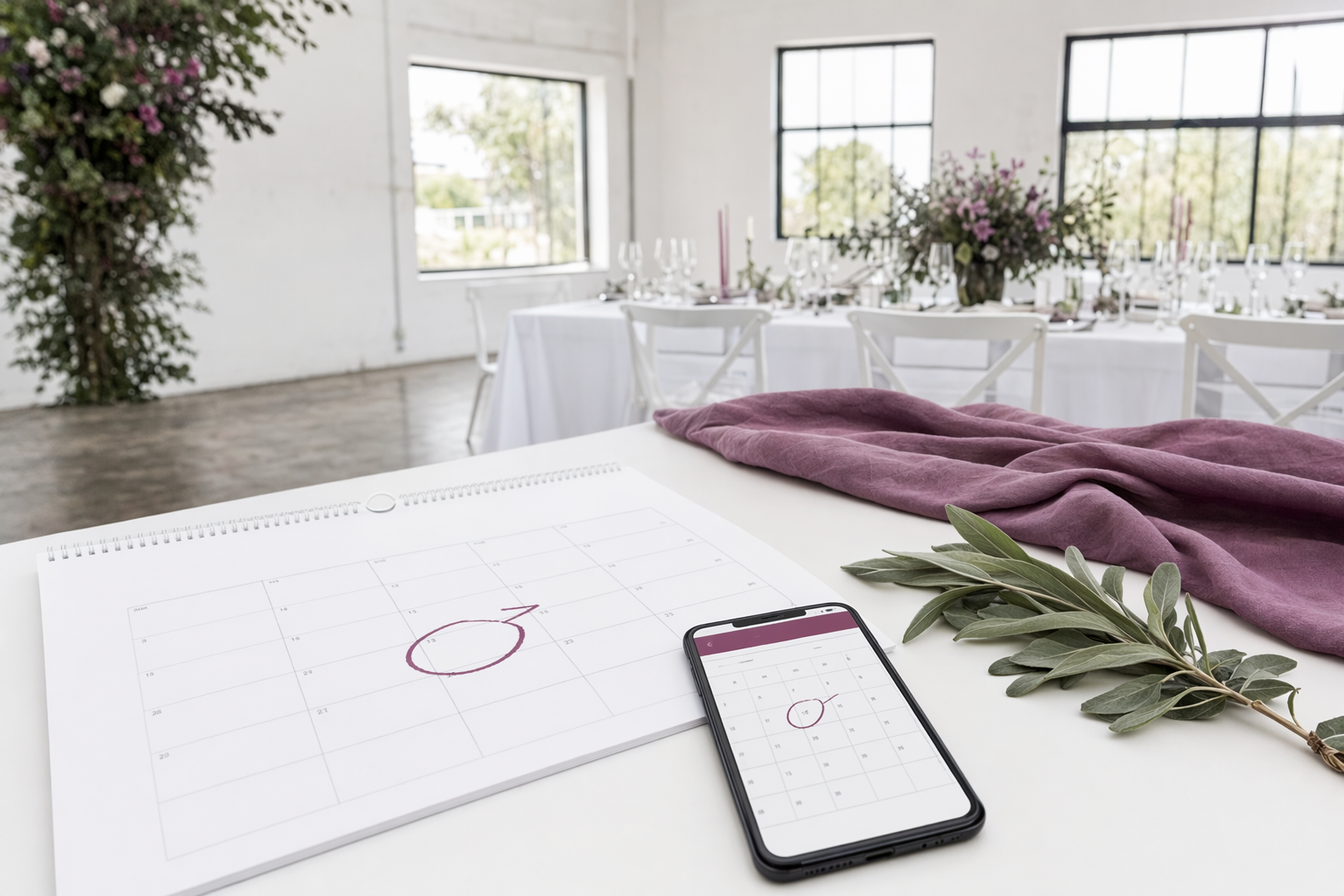
The best time to start
For many couples, the sweet spot is 9 to 18 months before the wedding. That window usually gives you time to tour a few places, compare the all-in cost, and keep your first-choice date from slipping away.
If you want a Saturday in peak season, a holiday weekend, a waterfront spot, or a very specific style like a vineyard or historic estate, start even earlier if you can. If your guest list is smaller, your date is flexible, or you are open to a weekday or off-season wedding, you may have more breathing room.
If you are planning from another city or country, build in extra time for messages, tours, and decisions. A free matching service like get matched can help you compare venues near your city or ZIP without paying to search.
- Typical planning window: 9–18 months ahead
- Peak-season Saturdays often need the earliest booking
- Flexible dates can open up more options

How your timeline changes by wedding style
A 300-guest ballroom wedding usually needs more lead time than a 40-guest backyard-style celebration. Bigger guest lists can affect room size, parking, staffing, ceremony space, and the food-and-beverage minimum, so venues often book those dates earlier.
Smaller weddings can sometimes move faster, especially if the venue already has a package for intimate events. Still, the earlier you start, the easier it is to compare site fee, per-plate pricing, service charge, deposit, overtime, corkage, and vendor rules before you fall in love with one place.
Different cultures, faith traditions, and ceremony styles may also need extra planning time for setup, timing, music, prayer space, or family traditions. That is normal, and it is worth asking about upfront.
- Larger guest counts often require more planning time
- Small weddings can be booked faster, but still need contract review
- Custom ceremonies may need extra setup or timing questions
What costs usually look like
Venue costs can vary a lot by city, season, day of the week, guest count, and what is included. A basic venue-only rental might be a few thousand dollars in some areas, while a full-service or high-demand venue can run much higher. In many places, couples may see all-in venue-related costs from about $3,000 to $15,000+ for simpler setups, and $20,000 or more for premium dates, larger guest counts, or more included services. Those ranges are not quotes.
Ask whether the venue uses a site fee, food-and-beverage minimum, per-plate pricing, service charge, or required deposit. Also ask about overtime, cancellation terms, vendor restrictions, and corkage if you plan to bring alcohol. The real number depends on what is included and what is added later.
If you want to compare costs clearly, check the full contract and confirm the date and price in writing before paying a deposit. If you want more help reading the fine print, see cost basics.
- Costs change with date, season, day of week, guest count, and inclusions
- Ask about site fee, food-and-beverage minimum, per-plate pricing, service charge
- Confirm the price and date in writing before paying a deposit
What to ask before you book
Before the two of you sign anything, ask what is actually included in the price and what is not. A venue may look affordable at first, but the total can change once you add tables, chairs, cleanup, taxes, staffing, or required catering.
Good questions: Is our date available? What is the deposit? When is the balance due? What happens if we need to change the date? Are there vendor restrictions? Is there a room minimum or food-and-beverage minimum? Are there extra charges for setup, teardown, security, parking, or extended hours?
It also helps to ask how the venue handles rain plans, accessibility, parking, noise limits, and timing for ceremony and reception. If anything matters to your family, faith, or culture, bring it up early so you are not surprised later. For more checklists, see planning guides and help.
- Ask what is included and what costs extra
- Review deposits, due dates, and change/cancellation rules
- Check rain plans, accessibility, parking, and vendor policies
When to book sooner rather than later
Book sooner if your date is flexible but important to you, if you want a popular venue type, or if you are planning a large guest list. The same is true if you need a specific month for family travel, a religious calendar, or a cultural tradition.
A simple rule: once you know your rough date, your guest count range, and your budget comfort zone, start touring. You do not need every detail finished first. Vowfield is a free matching service, not a wedding venue or planner, so the two of you stay in control and choose where to celebrate.
If you are ready to compare venues near you, get matched with places that fit your rough date, setting, city or ZIP, and preferred language. You share only contact and wedding-intent details, and then you can tour and compare at your own pace.
- Start early for popular dates and venue types
- You do not need every wedding detail before you begin
- The couple chooses, tours, compares, and confirms everything in writing

Book when you have a rough date, guest count, and budget, because popular venues can fill fast and the real cost depends on your date, city, and what is included.
Common questions
How far in advance do most couples book a wedding venue?
Many couples start 9 to 18 months ahead, but the right timing depends on the date, season, city, and guest count. Popular Saturdays and peak-season weekends usually go fastest.
Can we book later if our wedding is small?
Yes, smaller weddings can sometimes be booked on shorter timelines, especially if you are flexible on date and day of week. Still, it is smart to review the full contract and all extra fees before paying a deposit.
What should we watch for in the fine print?
Look for the site fee, food-and-beverage minimum, per-plate pricing, service charge, overtime, cancellation terms, vendor restrictions, and corkage. Confirm the price and date in writing and read the whole contract before signing.